The piece of text below is a shortened, hashed representation of this content. It is useful to ensure the content has not been tampered with, as a single modification would result in a totally different value.
Value:
b7b59c740aa095d641d8c35c34bc35956b5fafb72cbdcc81291a09d60dde3b0e
Source:
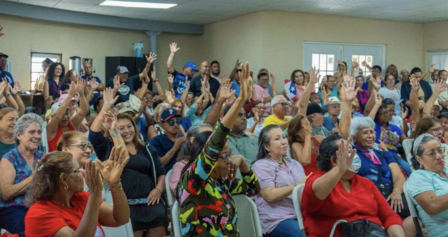
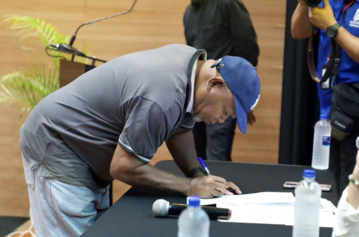
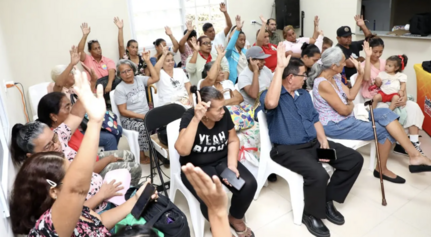
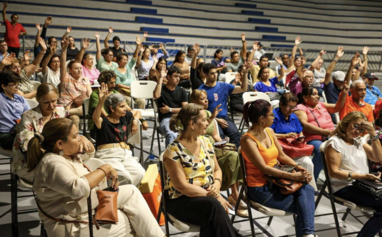
{"body":{"en":"<p>The strengthening of local democracy in the District of Panama consisted of transforming municipal management from a centralized and vertical model into a participatory and horizontal one, where citizens become decision-makers regarding public investment in their communities.</p><p><strong>Context:</strong> The District of Panama, with 1.08 million inhabitants across 26 “corregimientos”, historically faced a municipal management system with little real citizen participation. Law 37 of 2009 (Decentralization) marked a turning point by requiring the municipality to institutionalize formal participation mechanisms, supported by the Constitution and reinforced by Law 66 of 2015 and Executive Decree No. 10 of 2017.</p><p><strong>How it works:</strong> The practice operates through an annual Participatory Budgeting cycle in all 26 corregimientos. Each cycle begins with a needs assessment led by Local Development Boards (JDL) — elected residents who articulate neighborhood demands. This is followed by open public consultation forums where participants vote on priority projects, a technical evaluation by the National Decentralization Authority (AND), and finally implementation supervised by the Office of the Comptroller General and citizen oversight committees composed of residents.</p><p><strong>Inclusion:</strong> Specific spaces were created for youth, women, and persons with disabilities. Projects prioritize women’s urban safety, youth leadership, and universal accessibility in all implemented works. Female participation increased from 5,360 to 6,568 between administrations, consolidating structural gender parity.</p><p><strong>Results:</strong> 215 projects have been implemented — including parks, sports fields, health centers, and sidewalks — all originating from citizen proposals. In 2024–2025, 11,993 citizens participated directly. The practice connects the municipality with the AND, Comptroller General, Attorney General’s Office, ANTAI, and organizations such as AMUPA and IRI, forming a democratic ecosystem aligned with SDGs 5, 11, and 17.</p><p><strong>Sustainability:</strong> Property tax (IBI) funds are legally allocated to corregimientos, ensuring the continuity of the practice despite changes in administration. With more than 9 years of implementation, it has withstood political transitions and has become a permanent citizen right in the District of Panama.</p><p>More information:<br><a href=\"http://www.participa.mupa.gob.pa\"><u>www.participa.mupa.gob.pa<br>www.transaparencia.gob.pa</u></a><a href=\"http://www.transaparencia.gob.pa\"><u><br></u></a><a href=\"http://www.participa.mupa.gob.pa\"><u>https://www.oidp.net/docs/repo/doc1953.pdf</u></a></p><p><br></p>","es":"<p>El Fortalecimiento de la Democracia Local en el Distrito de Panamá consistió en transformar la gestión municipal de un modelo centralizado y vertical a uno participativo y horizontal, donde los ciudadanos se convirtieron en tomadores de decisiones sobre la inversión pública de sus comunidades.</p><p><strong>Contexto</strong>: El Distrito de Panamá, con 1.08 millones de habitantes distribuidos en 26 corregimientos, enfrentaba históricamente una gestión municipal sin participación ciudadana real. La Ley 37 de 2009 (Descentralización) fue el punto de inflexión que obligó a la Alcaldía a institucionalizar mecanismos formales de participación, respaldados por la Constitución Política y reforzados por la Ley 66 de 2015 y el Decreto Ejecutivo No. 10 de 2017.</p><p><strong>Cómo funciona</strong>: La práctica opera mediante un ciclo anual de Presupuesto Participativo en los 26 corregimientos. Cada ciclo comienza con un diagnóstico de necesidades liderado por las Juntas de Desarrollo Local (JDL) — vecinos electos que articulan las demandas barriales. Le siguen foros abiertos de consulta ciudadana donde los asistentes votan sus proyectos prioritarios, una evaluación técnica por la Autoridad Nacional de Descentralización (AND), y finalmente la ejecución supervisada por la Contraloría General de la República y comités de vigilancia ciudadana integrados por los propios vecinos.</p><p><strong>Inclusión</strong>: Se establecieron espacios específicos para jóvenes, mujeres y personas con discapacidad. Los proyectos priorizan seguridad urbana para mujeres, liderazgo joven y accesibilidad universal en toda obra ejecutada. La participación femenina creció de 5,360 a 6,568 entre administraciones, consolidando una paridad de género estructural.</p><p><strong>Resultados</strong>: 215 proyectos ejecutados — parques, canchas, centros de salud y aceras — que nacieron de la ciudadanía. En 2024-2025 participaron directamente 11,993 ciudadanos. La práctica articula a la Alcaldía con la AND, la Contraloría, la Procuraduría, la ANTAI y organizaciones como AMUPA e IRI, formando un ecosistema democrático alineado con los ODS 5, 11 y 17.</p><p><strong>Sostenibilidad</strong>: Los fondos del IBI están asignados por ley a los corregimientos, blindando la continuidad de la práctica ante cambios de administración. Lleva más de 9 años activa, sobreviviendo cambios políticos y consolidándose como un derecho ciudadano permanente en el Distrito de Panamá.</p><p>Mas informacion: <a href=\"http://www.participa.mupa.gob.pa\"><u>www.participa.mupa.gob.pa</u></a></p><p><a href=\"http://www.participa.mupa.gob.pa\"><u>www.transaparencia.gob.pa</u></a> </p><p><a href=\"http://www.participa.mupa.gob.pa\"><u>https://www.oidp.net/docs/repo/doc1953.pdf</u></a> </p><p><br></p>","fr":"<p>Le renforcement de la démocratie locale dans le district de Panamá a consisté à transformer la gestion municipale d’un modèle centralisé et vertical vers un modèle participatif et horizontal, où les citoyens deviennent des décideurs en matière d’investissement public dans leurs communautés.</p><p><strong>Contexte :</strong> Le district de Panamá, avec 1,08 million d’habitants répartis dans 26 “corregimientos”, faisait historiquement face à une gestion municipale sans véritable participation citoyenne. La loi 37 de 2009 (décentralisation) a constitué un tournant en obligeant la municipalité à institutionnaliser des mécanismes formels de participation, appuyés par la Constitution et renforcés par la loi 66 de 2015 et le décret exécutif n° 10 de 2017.</p><p><strong>Fonctionnement :</strong> La pratique repose sur un cycle annuel de budget participatif dans les 26 corregimientos. Chaque cycle commence par un diagnostic des besoins conduit par les Conseils de développement local (JDL) — des habitants élus qui articulent les demandes des quartiers. S’ensuivent des forums publics de consultation où les participants votent pour leurs projets prioritaires, une évaluation technique par l’Autorité nationale de décentralisation (AND), puis l’exécution supervisée par la Contraloría General de la República et des comités de vigilance citoyenne composés d’habitants.</p><p><strong>Inclusion :</strong> Des espaces spécifiques ont été créés pour les jeunes, les femmes et les personnes en situation de handicap. Les projets priorisent la sécurité urbaine des femmes, le leadership des jeunes et l’accessibilité universelle dans toutes les infrastructures réalisées. La participation des femmes est passée de 5 360 à 6 568 entre les différentes administrations, consolidant une parité de genre structurelle.</p><p><strong>Résultats :</strong> 215 projets ont été réalisés — parcs, terrains de sport, centres de santé et trottoirs — issus directement des propositions citoyennes. En 2024-2025, 11 993 citoyens ont participé directement. La pratique articule la municipalité avec l’AND, la Contraloría, la Procuraduría, l’ANTAI et des organisations telles que l’AMUPA et l’IRI, formant un écosystème démocratique aligné sur les ODD 5, 11 et 17.</p><p><strong>Durabilité :</strong> Les fonds issus de l’IBI sont légalement attribués aux corregimientos, garantissant la continuité de la pratique malgré les changements d’administration. Active depuis plus de 9 ans, elle a traversé plusieurs cycles politiques et s’est consolidée comme un droit citoyen permanent dans le district de Panamá.</p><p>Plus d’informations :<br><a href=\"http://www.participa.mupa.gob.pa\"><u>www.participa.mupa.gob.pa<br>www.transaparencia.gob.pa</u></a><a href=\"http://www.transaparencia.gob.pa\"><u><br></u></a><a href=\"http://www.participa.mupa.gob.pa\"><u>https://www.oidp.net/docs/repo/doc1953.pdf</u></a></p><p><br></p>"},"title":{"en":"Panama: Strengthening Local Democracy in the District of Panama","es":"Panamá: Fortalecimiento de la Democracia Local en el Distrito de Panamá","fr":"Panamá : Renforcement de la démocratie locale dans le district de Panamá"}}
This fingerprint is calculated using a SHA256 hashing algorithm. In order to replicate it yourself, you can use an MD5 calculator online and copy-paste the source data.






Share
Or copy link