The piece of text below is a shortened, hashed representation of this content. It is useful to ensure the content has not been tampered with, as a single modification would result in a totally different value.
Value:
23934b3aa7adb9fb1b045dfe89ec22238445b30f0a266ed83fb2451071ed2ae4
Source:
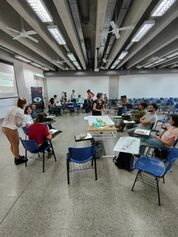
{"body":{"en":"<p>“+ Biodiversity: Conservation and Environmental Democracy” consists of the participatory design and implementation of management plans for protected areas in the metropolitan area of Rosario, in the province of Santa Fe (Argentina), a region with one of the lowest proportions of protected land in the country and heavily transformed by agricultural expansion.</p><p>The initiative emerged from a call by the Municipality of Rosario to the National University of Rosario (UNR) to develop the Management Plan for the Los Tres Cerros Municipal Reserve. From the outset, the practice integrated scientific knowledge production, territorial planning, and citizen participation. Through environmental surveys, assessments of the current situation and conservation values, and open workshops, the zoning, conservation guidelines, and public-use strategies were collectively developed.</p><p>The process brought together the University, local governments, socio-environmental organizations, and citizens, along with co-management spaces such as the Multisectoral Commission Legado Deliot. The model was later institutionalized within the Environmental Policy Area of the UNR and replicated in the Villa Gobernador Gálvez Natural Reserve. It is currently being implemented in the Bosque de los Constituyentes, consolidating a transferable model of participatory governance.</p><p>The areas involved — located in the basins of the Ludueña stream, the Saladillo stream, and the Paraná River — provide essential contributions to the population, including water regulation, mitigation of extreme events, biodiversity conservation, and spaces for health and environmental education. In a context of climate crisis, strengthening their management is strategic.</p><p>The practice not only improved the planning and administration of these protected areas, but also promoted the generation of academic knowledge, the training of professionals, and the consolidation of permanent mechanisms for public participation, contributing to the institutionalization of environmental democracy in the metropolitan territory.</p><p>Learn more: <a href=\"https://unr.edu.ar/ambiente/\"><u>https://unr.edu.ar/ambiente/</u></a> </p><p><a href=\"https://unr.edu.ar/ambiente/\"><u>https://www.oidp.net/docs/repo/doc1857.pdf</u></a></p><p>Video: <a href=\"https://youtube.com/shorts/MpTuNP49P-4\"><u>https://youtube.com/shorts/MpTuNP49P-4</u></a> </p>","es":"<p>“+ Biodiversidad: Conservación y Democracia Ambiental” consiste en el diseño e implementación participativa de planes de manejo para áreas protegidas del área metropolitana de Rosario, en la provincia de Santa Fe (Argentina), una región con una de las superficies bajo protección más bajas del país y fuertemente transformada por la expansión agropecuaria.</p><p>La iniciativa surgió a partir de la convocatoria de la Municipalidad de Rosario a la Universidad Nacional de Rosario (UNR) para elaborar el Plan de Manejo de la Reserva Municipal Los Tres Cerros. Desde su inicio, la práctica integró producción de conocimiento científico, planificación territorial y participación ciudadana. A través de relevamientos ambientales, diagnósticos del estado de situación y los valores de conservación y talleres abiertos, se construyeron de manera colectiva la zonificación, los lineamientos de conservación y las estrategias de uso público.</p><p>El proceso articuló Universidad, gobiernos locales, organizaciones socioambientales y ciudadanía, en conjunto con espacios de cogestión como la Comisión Multisectorial Legado Deliot. Posteriormente, el modelo fue institucionalizado en el Área de Política Ambiental de la UNR y replicado en la Reserva Natural de Villa Gobernador Gálvez y actualmente se implementa en el Bosque de los Constituyentes, consolidando un esquema transferible de gobernanza participativa.</p><p>Las áreas involucradas —ubicadas en la cuenca del arroyo Ludueña, arroyo Saladillo y el río Paraná— brindan contribuciones esenciales a la población, como regulación hídrica, mitigación de eventos extremos, conservación de biodiversidad y espacios para la salud y la educación ambiental. En un contexto de crisis climática, fortalecer su gestión resulta estratégico.</p><p>La práctica no solo mejoró la planificación y administración de estas áreas protegidas, sino que también promovió la generación de conocimiento académico, la formación de profesionales y la consolidación de mecanismos permanentes de participación pública, contribuyendo a institucionalizar la democracia ambiental en el territorio metropolitano.</p><p>Para conocer más: <a href=\"https://unr.edu.ar/ambiente/\"><u>https://unr.edu.ar/ambiente/</u></a> </p><p><a href=\"https://unr.edu.ar/ambiente/\"><u>https://www.oidp.net/docs/repo/doc1857.pdf</u></a> </p><p>Video: <a href=\"https://youtube.com/shorts/MpTuNP49P-4\"><u>https://youtube.com/shorts/MpTuNP49P-4</u></a> </p>","fr":"<p>“+ Biodiversité : Conservation et Démocratie Environnementale” consiste en la conception et la mise en œuvre participatives de plans de gestion pour des aires protégées de l’aire métropolitaine de Rosario, dans la province de Santa Fe (Argentine), une région présentant l’une des plus faibles superficies protégées du pays et fortement transformée par l’expansion agricole.</p><p>L’initiative est née d’un appel de la Municipalité de Rosario à l’Université Nationale de Rosario (UNR) afin d’élaborer le Plan de gestion de la Réserve municipale Los Tres Cerros. Dès le départ, la pratique a intégré la production de connaissances scientifiques, la planification territoriale et la participation citoyenne. À travers des relevés environnementaux, des diagnostics de la situation et des valeurs de conservation, ainsi que des ateliers ouverts, la zonification, les lignes directrices de conservation et les stratégies d’usage public ont été élaborées collectivement.</p><p>Le processus a articulé l’Université, les gouvernements locaux, les organisations socio-environnementales et la citoyenneté, ainsi que des espaces de cogestion tels que la Commission multisectorielle Legado Deliot. Par la suite, le modèle a été institutionnalisé au sein de l’Area de Politique Environnementale de l’UNR et répliqué dans la Réserve naturelle de Villa Gobernador Gálvez. Il est actuellement mis en œuvre dans le Bosque de los Constituyentes, consolidant ainsi un modèle transférable de gouvernance participative.</p><p>Les zones concernées — situées dans les bassins du ruisseau Ludueña, du ruisseau Saladillo et du fleuve Paraná — apportent des contributions essentielles à la population, telles que la régulation hydrique, l’atténuation des événements extrêmes, la conservation de la biodiversité et des espaces pour la santé et l’éducation environnementale. Dans un contexte de crise climatique, renforcer leur gestion est stratégique.</p><p>La pratique a non seulement amélioré la planification et l’administration de ces aires protégées, mais elle a également favorisé la production de connaissances académiques, la formation de professionnels et la consolidation de mécanismes permanents de participation publique, contribuant ainsi à l’institutionnalisation de la démocratie environnementale sur le territoire métropolitain.</p><p>Pour en savoir plus: <a href=\"https://unr.edu.ar/ambiente/\"><u>https://unr.edu.ar/ambiente/</u></a> </p><p><a href=\"https://unr.edu.ar/ambiente/\"><u>https://www.oidp.net/docs/repo/doc1857.pdf</u></a> </p><p>Video: <a href=\"https://youtube.com/shorts/MpTuNP49P-4\"><u>https://youtube.com/shorts/MpTuNP49P-4</u></a> </p>"},"title":{"en":"Rosario: + Biodiversity: Conservation and Environmental Democracy","es":"Rosario: + Biodiversidad: Conservación y Democracia Ambiental","fr":"Rosario : + Biodiversité : Conservation et Démocratie Environnementale"}}
This fingerprint is calculated using a SHA256 hashing algorithm. In order to replicate it yourself, you can use an MD5 calculator online and copy-paste the source data.







Share
Or copy link