

New Taipei City: “Empower and Assist Communities: Creating a Happy New Taipei—Social Welfare Participatory Budgeting”

"Empower and Assist Communities: Creating a Happy New Taipei—Social Welfare Participatory Budgeting" is a pioneering democratic innovation program that was first implemented in 2015. Through a mechanism of proposals from civic groups, it promotes the involvement of groups and communities in public affairs, thereby creating a sustainable virtuous cycle.
Program background: As Taiwan's most populous municipality with significant urban-rural disparities, New Taipei City faces challenges such as an aging population and uneven distribution of social welfare resources. In response to the burgeoning civic consciousness following the Sunflower Movement, the New Taipei City Government has promoted "participatory budgeting for social welfare," shifting decision-making from the government to the private sector.
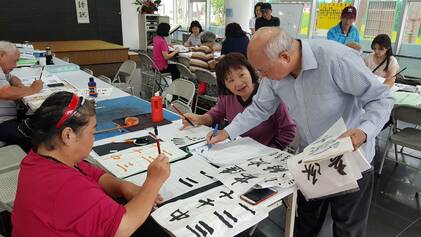
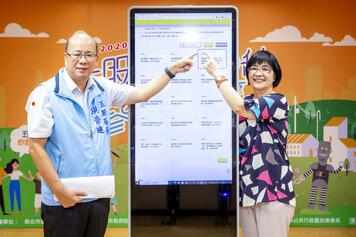
Project content: This project adopted an ongoing two-year district implementation cycle, with the core process comprising six stages: Preparation and capacity building, Residents' Social Welfare Conferences, group proposals, expert reviews and online public voting, implementation, and a citizen deliberator certification system.
Key innovations: This is the first time in Taiwan that social welfare has been included as a theme in participatory budgeting, with civic groups serving as the proposing entities. This shift in decision-making from expert-led governance to citizen co-governance demonstrates a paradigm shift in democratic governance. Participatory budgeting for social welfare is now integrated into annual work plans and the government budget system, forming an institutionalized operational model. Information disclosure and regular reviews strengthen decision-making transparency and public accountability. A talent development mechanism was also established with partner organizations.
Value and impact: This program aligns with the city government's core value of sustainable development, and is highly consistent with the UN's SDG 3 Good Health and Well-being and SDG 10 Reducing Inequalities.
Lessons learned: When facing a wide range of social welfare issues with diverse needs, a suitable participatory budgeting mechanism can enable different social welfare groups to meaningfully articulate their requirements and engage in thorough discussions and exchanges of opinions with community groups. The government can address shortcomings in existing social welfare policies, thus enhancing policy responsiveness and effectiveness.
Learn more about: https://reurl.cc/Xaz2Aj
QR Code


Share
Or copy link