The piece of text below is a shortened, hashed representation of this content. It is useful to ensure the content has not been tampered with, as a single modification would result in a totally different value.
Value:
1d6a8708ee76567a7d1e8ac0be65cad92dcf348b20bc23b707c022590bdc560f
Source:
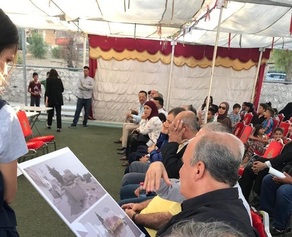
{"body":{"en":"<p>The German Federal Ministry for Economic Cooperation and Development (BMZ) through the GIZ sponsored the implementation of the ILCA pilot project set up to develop elements of green infrastructure at selected sites in East Amman, in collaboration with the Greater Amman Municipality as an implementation partner and the jordanian Ministry of Environment as the political partner.</p><div class=\"editor-content-image\" data-image=\"\"><img src=\"https://lh7-us.googleusercontent.com/DtCZSTzkiWu5Zb9mkggcUn2UwBicicDAZthAAMnoJjiUOYgmFsSu5swzEncQyU5SRwAoC2GXBOkmYVj8Vnjmf2z1h6BYaOVEEPHRcJI1_VI7ua76icrZTwtfXHBMtVvam8UfLIAugpNqPvWFui83It4\" width=\"602\" alt=\"\"></div><p>The approach adopted by ILCA was holistic, focusing on the development of green infrastructure to improve access to public spaces, mitigate environmental risks, and foster community participation. By leveraging the Miyawaki method, which involves soil engineering and careful selection of native plant species, ILCA aimed to create urban forests that would enhance biodiversity, regulate air temperature, and increase carbon sequestration. This innovative approach, previously successful in dryland areas and deserts, was adapted for the urban context of East Amman for the first time.</p><p>This approach, facilitated by close collaboration with stakeholders such as the Ministry of Environment and local communities, emphasized community ownership and inclusivity in decision-making processes. By engaging residents in the design, planning, and management of green spaces, ILCA fostered a sense of ownership and belonging while addressing specific needs, particularly those of women and girls.</p><p>The project not only improved urban well-being but also contributed to environmental sustainability and resilience. By integrating green infrastructure into urban planning, ILCA aimed to mitigate the adverse effects of climate change and promote a more sustainable and livable urban environment. Furthermore, ILCA aligned with the Sustainable Development Goals (SDGs), particularly SDG 11, SDG 13, and SDG 15. By addressing local challenges in water-scarce environments and promoting innovative solutions for urban greening, ILCA exemplified a replicable model for sustainable urban development, with implications extending beyond the context of Amman to inform practices in other rapidly urbanizing regions globally.</p><p>Through its participatory approach and emphasis on collaborative governance, ILCA demonstrated the potential for inclusive decision-making processes to drive positive change in urban development. By empowering local communities and fostering partnerships between government agencies, NGOs, and residents, ILCA laid the groundwork for a more resilient and equitable urban future in East Amman and beyond.</p><ul><li><p><a href=\"https://www.giz.de/en/worldwide/83767.html\" rel=\"noopener noreferrer\" target=\"_blank\">https://www.giz.de/en/worldwide/83767.html</a> </p></li></ul><p> </p>","es":"<p>El Ministerio Federal Alemán de Cooperación Económica y Desarrollo (BMZ), a través de la (GIZ), patrocinó la ejecución del proyecto piloto ILCA, creado para desarrollar elementos de infraestructura verde en lugares seleccionados del este de Ammán, en colaboración con el Ayuntamiento del Gran Ammán como socio ejecutor y el Ministerio jordano de Medio Ambiente como socio político.</p><div class=\"editor-content-image\" data-image=\"\"><img src=\"https://lh7-us.googleusercontent.com/DtCZSTzkiWu5Zb9mkggcUn2UwBicicDAZthAAMnoJjiUOYgmFsSu5swzEncQyU5SRwAoC2GXBOkmYVj8Vnjmf2z1h6BYaOVEEPHRcJI1_VI7ua76icrZTwtfXHBMtVvam8UfLIAugpNqPvWFui83It4\" width=\"602\" alt=\"\"></div><p>El enfoque adoptado por ILCA fue holístico, centrándose en el desarrollo de infraestructuras verdes para mejorar el acceso a los espacios públicos, mitigar los riesgos medioambientales y fomentar la participación de la comunidad. Aprovechando el método Miyawaki, que implica la ingeniería del suelo y una cuidadosa selección de especies vegetales autóctonas, ILCA pretendía crear bosques urbanos que mejoraran la biodiversidad, regularan la temperatura del aire y redujeran el carbono. Este enfoque innovador, que ya había tenido éxito en zonas áridas y desiertos, se adaptó por primera vez al contexto urbano del este de Ammán.</p><p>Este planteamiento, facilitado por la estrecha colaboración con partes interesadas como el Ministerio de Medio Ambiente y las comunidades locales, hizo hincapié en la propiedad comunitaria y la inclusión en los procesos de toma de decisiones. Al implicar a los residentes en el diseño, la planificación y la gestión de los espacios verdes, ILCA fomentó un sentimiento de propiedad y pertenencia, al tiempo que abordaba necesidades específicas, sobre todo de mujeres y niñas.</p><p>El proyecto no solo mejoró el bienestar urbano, sino que también contribuyó a la sostenibilidad y resiliencia medioambiental. Mediante la integración de infraestructuras verdes en la planificación urbana, ILCA buscó mitigar los efectos adversos del cambio climático y promover un entorno urbano más sostenible y habitable. Además, la ILCA se alineó con los Objetivos de Desarrollo Sostenible (ODS), en particular el ODS 11, el ODS 13 y el ODS 15. Al abordar los retos locales en entornos con escasez de agua y promover soluciones innovadoras para el reverdecimiento urbano, ILCA ejemplificó un modelo replicable para el desarrollo urbano sostenible, con implicaciones que se extienden más allá del contexto de Ammán para informar las prácticas en otras regiones de rápida urbanización en todo el mundo.</p><p>A través de su enfoque participativo y su énfasis en la gobernanza colaborativa, ILCA demostró el potencial de los procesos inclusivos de toma de decisiones para impulsar un cambio positivo en el desarrollo urbano. Al empoderar a las comunidades locales y fomentar las asociaciones entre organismos gubernamentales, ONG y residentes, ILCA sentó las bases para un futuro urbano más resiliente y equitativo en el este de Ammán y más allá.</p><ul><li><p><a href=\"https://www.giz.de/en/worldwide/83767.html\" rel=\"noopener noreferrer\" target=\"_blank\">https://www.giz.de/en/worldwide/83767.html</a> </p></li></ul>","fr":"<p>Le ministère fédéral allemand de la coopération économique et du développement (BMZ), par l'intermédiaire de la GIZ, a parrainé la mise en œuvre du projet pilote ILCA visant à développer des éléments d'infrastructure verte sur des sites sélectionnés à l'est d'Amman, en collaboration avec la municipalité du Grand Amman en tant que partenaire de mise en œuvre et le ministère jordanien de l'environnement en tant que partenaire politique.</p><div class=\"editor-content-image\" data-image=\"\"><img src=\"https://lh7-us.googleusercontent.com/DtCZSTzkiWu5Zb9mkggcUn2UwBicicDAZthAAMnoJjiUOYgmFsSu5swzEncQyU5SRwAoC2GXBOkmYVj8Vnjmf2z1h6BYaOVEEPHRcJI1_VI7ua76icrZTwtfXHBMtVvam8UfLIAugpNqPvWFui83It4\" width=\"602\" alt=\"\"></div><p>L'approche adoptée par l'ILCA était holistique et se concentrait sur le développement d'infrastructures vertes pour améliorer l'accès aux espaces publics, atténuer les risques environnementaux et encourager la participation de la communauté. En s'appuyant sur la méthode Miyawaki, qui implique l'ingénierie des sols et la sélection minutieuse d'espèces végétales indigènes, l'ILCA a cherché à créer des forêts urbaines qui amélioreraient la biodiversité, réguleraient la température de l'air et augmenteraient le piégeage du carbone. </p><p>Cette approche innovante, qui avait déjà fait ses preuves dans les zones arides et les déserts, a été adaptée pour la première fois au contexte urbain de l'est d'Amman.</p><p>Cette approche, facilitée par une collaboration étroite avec les parties prenantes telles que le ministère de l'environnement et les communautés locales, a mis l'accent sur l'appropriation par la communauté et l'inclusion dans les processus de prise de décision. En faisant participer les habitants à la conception, à la planification et à la gestion des espaces verts, l'ILCA a favorisé un sentiment d'appropriation et d'appartenance tout en répondant à des besoins spécifiques, notamment ceux des femmes et des jeunes filles.</p><p>Le projet a non seulement amélioré le bien-être urbain, mais a également contribué à la durabilité et à la résilience de l'environnement. En intégrant des infrastructures vertes dans la planification urbaine, l'ILCA visait à atténuer les effets néfastes du changement climatique et à promouvoir un environnement urbain plus durable et plus vivable. En outre, l'ILCA s'est alignée sur les objectifs de développement durable (ODD), en particulier les ODD 11, 13 et 15. En relevant les défis locaux dans des environnements où l'eau est rare et en promouvant des solutions innovantes pour l'écologisation urbaine, l'ILCA a donné l'exemple d'un modèle reproductible de développement urbain durable, dont les implications dépassent le contexte d'Amman pour informer les pratiques dans d'autres régions en urbanisation rapide dans le monde entier.</p><p>Grâce à son approche participative et à l'accent mis sur la gouvernance collaborative, l'ILCA a démontré le potentiel des processus décisionnels inclusifs pour susciter des changements positifs dans le développement urbain. En responsabilisant les communautés locales et en favorisant les partenariats entre les agences gouvernementales, les ONG et les habitants, l'ILCA a jeté les bases d'un avenir urbain plus résilient et plus équitable à Amman-Est et au-delà.</p><ul><li><p><a href=\"https://www.giz.de/en/worldwide/83767.html\" rel=\"noopener noreferrer\" target=\"_blank\">https://www.giz.de/en/worldwide/83767.html</a> </p></li></ul><p> </p>"},"title":{"en":"Amman: Improving Living Conditions in Poverty-Stricken Areas of Amman Project and urban Micro Lungs ","es":"Ammán: Proyecto de mejora de las condiciones de vida en las zonas afectadas por la pobreza de Ammán y micro pulmones urbanos ","fr":"Amman : Projet d'amélioration des conditions de vie dans les zones pauvres d'Amman et micro-poumons urbains "}}
This fingerprint is calculated using a SHA256 hashing algorithm. In order to replicate it yourself, you can use an MD5 calculator online and copy-paste the source data.







Share
Or copy link