The piece of text below is a shortened, hashed representation of this content. It is useful to ensure the content has not been tampered with, as a single modification would result in a totally different value.
Value:
98f1846947838d9b91ad8744905923ff874eb7dd9d40e23fe566b8470a8fbb0d
Source:
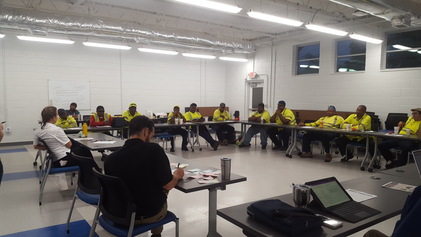
{"body":{"en":"<p>Designing and testing a curbside food waste collection program in Durham, NC required marrying behavioral science, community-centered design, and rigorous evaluation to achieve significant waste reduction and environmental benefits for residents.</p><div class=\"editor-content-image\" data-image=\"\"><img src=\"https://lh7-us.googleusercontent.com/cJ9AEdzxp6bjPMNgfJ-Y6efbI9SVOu33h3l3McdjztI--CU33hoQrLMW3zRjymjW4om5veSJLEslQyQ8k5BZs2XENCUCXPdd-AI7F_0-QzC0CDRIb-zZ1pXedDdH0dj0olzJfCrItP5pyVuRfkoY6Dg\" width=\"482\" alt=\"\"></div><p>Durham is a vibrant city known for its rich cultural heritage, progressive values, and commitment to sustainability. Durham prioritizes community engagement and empowerment, striving for equity and inclusivity.</p><p>The genesis of our practice, a curbside food waste collection service, stemmed from a waste reduction initiative embedded in the City's Strategic Plan. Recognizing the economic, environmental, and social challenges posed by landfilling compostable waste, Durham embarked on a journey to create a community-driven, no-cost curbside composting service. This innovative approach emerged from data-driven insights, fiscal prudence, environmental stewardship, and a steadfast commitment to justice, reflecting Durham's ethos of innovation and inclusivity.</p><p>Our methodology started with a citywide survey and resident interviews, followed by prototyping, full-scale implementation, and a randomized controlled trial to measure impact. Throughout all phases, this practice employed a multi-channel resident communication approach, utilizing social media, community groups, flyers, text helplines, and postcards to engage residents. The most innovative aspect lies in our iterative and inclusive approach, integrating human-centered design, rigorous evaluation, and engagement with garbage collections staff to enhance program effectiveness.</p><p>Specific groups targeted include diverse residents and garbage collectors, ensuring comprehensive representation and empowerment. Evaluation mechanisms encompassed qualitative surveys, interviews, and quantitative data on waste reduction, spillover behaviors, and resident feedback.</p><p>The impact of our practice has been substantial, with significant waste diversion, reduced greenhouse gas emissions, and positive effects on resident satisfaction. Over 30,000 pounds of food waste were diverted from landfills in the first year, with a potential annual reduction of 14,000 tons if scaled citywide. Residents showed increased positive perceptions of local government, indicating broad social benefits beyond environmental achievements. The practice has contributed to institutionalizing participatory democracy in Durham, fostering a culture of environmental stewardship among residents.</p><ul><li><p><a href=\"https://www.durhamnc.gov/4625/Food-Waste-Collection-Pilot\" rel=\"noopener noreferrer\" target=\"_blank\">https://www.durhamnc.gov/4625/Food-Waste-Collection-Pilot</a></p></li></ul>","es":"<p>Diseñar y poner a prueba un programa de recogida de residuos alimentarios en la acera de Durham (Carolina del Norte) exigió combinar la ciencia del comportamiento, el diseño centrado en la comunidad y una evaluación rigurosa para lograr una reducción significativa de los residuos y beneficios medioambientales para los residentes.</p><div class=\"editor-content-image\" data-image=\"\"><img src=\"https://lh7-us.googleusercontent.com/cJ9AEdzxp6bjPMNgfJ-Y6efbI9SVOu33h3l3McdjztI--CU33hoQrLMW3zRjymjW4om5veSJLEslQyQ8k5BZs2XENCUCXPdd-AI7F_0-QzC0CDRIb-zZ1pXedDdH0dj0olzJfCrItP5pyVuRfkoY6Dg\" width=\"482\" alt=\"\"></div><p>Durham es una ciudad vibrante conocida por su rico patrimonio cultural, sus valores progresistas y su compromiso con la sostenibilidad. Durham da prioridad a la participación y el empoderamiento de la comunidad, luchando por la equidad y la inclusión.</p><p>La génesis de nuestra práctica, un servicio de recogida de residuos alimentarios puerta a puerta, surgió de una iniciativa de reducción de residuos incluida en el Plan Estratégico de la ciudad. Consciente de los retos económicos, medioambientales y sociales que plantea el vertido de residuos compostables, Durham se embarcó en la creación de un servicio de compostaje gratuito e impulsado por la comunidad. Este enfoque innovador surgió a partir de una visión basada en los datos, la prudencia fiscal, la protección del medio ambiente y un firme compromiso con la justicia, lo que refleja el espíritu de innovación e inclusión de Durham.</p><p>Nuestra metodología comenzó con una encuesta en toda la ciudad y entrevistas a los residentes, seguida de la creación de prototipos, la aplicación a gran escala y un ensayo controlado aleatorio para medir el impacto. A lo largo de todas las fases, esta práctica empleó un enfoque de comunicación multicanal con los residentes, utilizando las redes sociales, grupos comunitarios, folletos, líneas telefónicas de ayuda y postales para implicarlos. El aspecto más innovador reside en nuestro enfoque iterativo e inclusivo, que integra el diseño centrado en el ser humano, la evaluación rigurosa y la colaboración con el personal de recogida de basuras para mejorar la eficacia del programa.</p><p>Entre los grupos específicos a los que nos dirigimos se encuentran residentes y basureros diversos, garantizando así una representación y una capacitación amplias. Los mecanismos de evaluación abarcaron encuestas cualitativas, entrevistas y datos cuantitativos sobre la reducción de residuos, comportamientos indirectos y opiniones de los residentes.</p><p>El impacto de nuestra práctica ha sido sustancial, con una importante desviación de residuos, una reducción de las emisiones de gases de efecto invernadero y efectos positivos en la satisfacción de los residentes. En el primer año se desviaron de los vertederos más de 30.000 libras de residuos alimentarios, con una reducción anual potencial de 14.000 toneladas si se extendiera a toda la ciudad. Los residentes mostraron una mayor percepción positiva del gobierno local, lo que indica amplios beneficios sociales más allá de los logros medioambientales. La práctica ha contribuido a institucionalizar la democracia participativa en Durham, fomentando una cultura de gestión medioambiental entre los residentes.</p><p><br></p><ul><li><p><a href=\"https://www.durhamnc.gov/4625/Food-Waste-Collection-Pilot\" rel=\"noopener noreferrer\" target=\"_blank\">https://www.durhamnc.gov/4625/Food-Waste-Collection-Pilot</a> </p></li></ul>","fr":"<p>Pour concevoir et tester un programme de collecte des déchets alimentaires en porte-à-porte à Durham, en Caroline du Nord, il a fallu combiner la science du comportement, la conception centrée sur la communauté et une évaluation rigoureuse afin d'obtenir une réduction significative des déchets et des avantages environnementaux pour les habitants.</p><div class=\"editor-content-image\" data-image=\"\"><img src=\"https://lh7-us.googleusercontent.com/cJ9AEdzxp6bjPMNgfJ-Y6efbI9SVOu33h3l3McdjztI--CU33hoQrLMW3zRjymjW4om5veSJLEslQyQ8k5BZs2XENCUCXPdd-AI7F_0-QzC0CDRIb-zZ1pXedDdH0dj0olzJfCrItP5pyVuRfkoY6Dg\" width=\"482\" alt=\"\"></div><p>Durham est une ville dynamique connue pour son riche patrimoine culturel, ses valeurs progressistes et son engagement en faveur du développement durable. Durham donne la priorité à l'engagement et à l'autonomisation des communautés, en s'efforçant d'assurer l'équité et l'inclusion.</p><p>La genèse de notre pratique, un service de collecte des déchets alimentaires en porte-à-porte, est née d'une initiative de réduction des déchets incluse dans le plan stratégique de la ville. Consciente des défis économiques, environnementaux et sociaux posés par l'élimination des déchets compostables, Durham s'est lancée dans la création d'un service de compostage gratuit et communautaire. Cette approche novatrice est le fruit d'une vision fondée sur des données, de la prudence budgétaire, de la protection de l'environnement et d'un engagement fort en faveur de l'équité, reflétant l'esprit d'innovation et d'inclusion de Durham.</p><p>Notre méthodologie a commencé par une enquête à l'échelle de la ville et des entretiens avec les résidents, suivis d'un prototypage, d'une mise en œuvre à grande échelle et d'un essai contrôlé randomisé pour mesurer l'impact. À toutes les étapes, cette pratique a utilisé une approche de communication multicanal avec les résidents, en utilisant les médias sociaux, les groupes communautaires, les dépliants, les lignes d'assistance par SMS et les cartes postales pour impliquer les résidents. L'aspect le plus innovant réside dans notre approche itérative et inclusive, qui intègre une conception centrée sur l'humain, une évaluation rigoureuse et un engagement avec le personnel chargé de la collecte des ordures afin d'améliorer l'efficacité du programme.</p><p>Les groupes spécifiques ciblés comprennent des résidents divers et des éboueurs, assurant ainsi une représentation complète et une responsabilisation. Les mécanismes d'évaluation comprennent des enquêtes qualitatives, des entretiens et des données quantitatives sur la réduction des déchets, les comportements de débordement et le retour d'information des résidents.</p><p>L'impact de notre pratique a été considérable, avec un détournement important des déchets, une réduction des émissions de gaz à effet de serre et des effets positifs sur la satisfaction des résidents. Plus de 30 000 livres de déchets alimentaires ont été détournés des décharges au cours de la première année, avec une réduction annuelle potentielle de 14 000 tonnes si le projet était étendu à l'ensemble de la ville. Les habitants ont une perception plus positive de l'administration locale, ce qui indique des avantages sociaux étendus au-delà des réalisations environnementales. Cette pratique a contribué à institutionnaliser la démocratie participative à Durham, en favorisant une culture de gestion environnementale parmi les habitants.</p><p><br></p><ul><li><p><a href=\"https://www.durhamnc.gov/4625/Food-Waste-Collection-Pilot\" rel=\"noopener noreferrer\" target=\"_blank\">https://www.durhamnc.gov/4625/Food-Waste-Collection-Pilot</a> </p></li></ul>"},"title":{"en":"Durham: Designing a community-centered curbside food waste collection program","es":"Durham: Diseño de un programa de recogida de residuos de alimentos puerta a puerta centrado en la comunidad","fr":"Durham : Conception d'un programme communautaire de collecte sélective des déchets alimentaires"}}
This fingerprint is calculated using a SHA256 hashing algorithm. In order to replicate it yourself, you can use an MD5 calculator online and copy-paste the source data.







Share
Or copy link